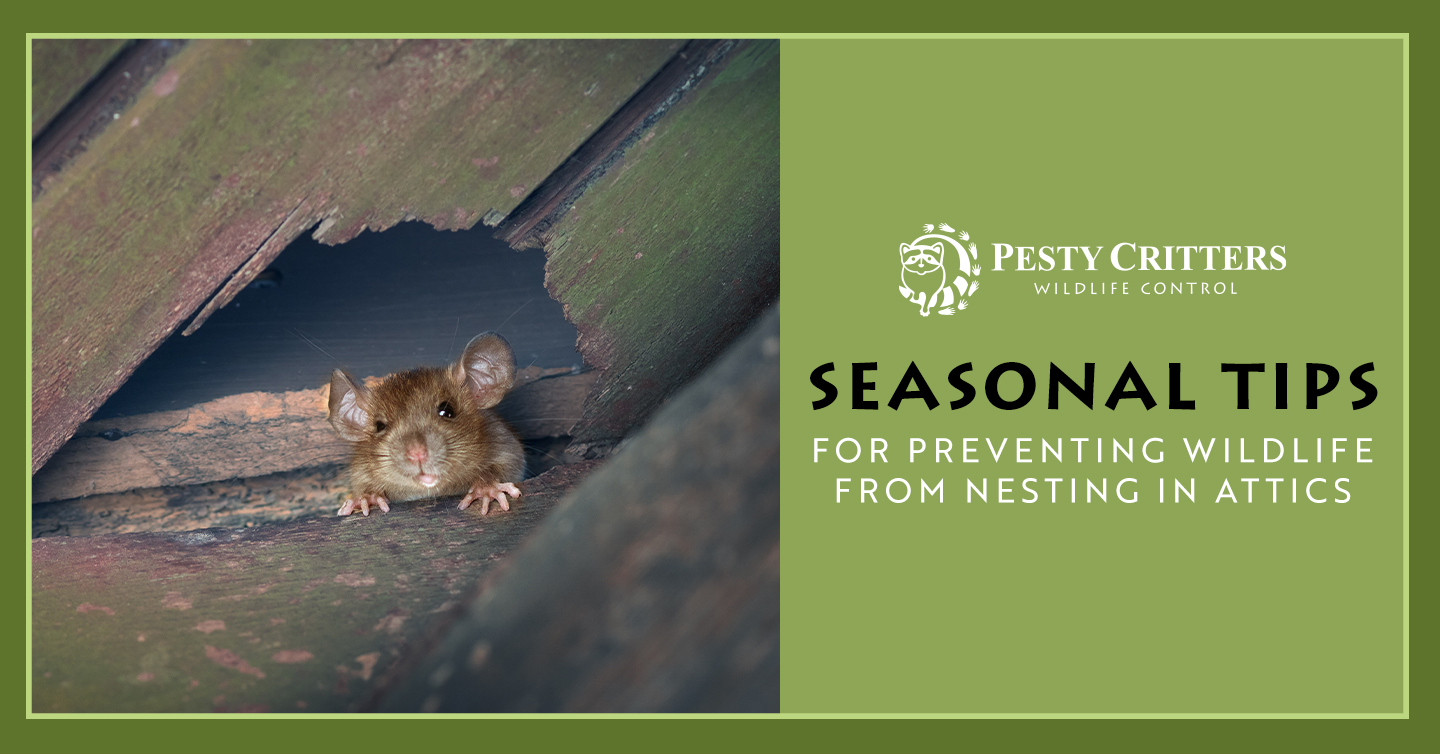
As the days lengthen and the warmth of late April embraces Auburn-Opelika, the natural world awakens with new life. Spring heralds the birthing season for many wildlife species, making it a prime time to review tips for preventing wildlife from nesting in attics. Common culprits seeking cozy attic spaces include raccoons, squirrels, rodents, birds and bats. By taking preventive measures now, you can protect your home from unwanted guests.
Common spring attic nesting wildlife
Raccoons, for example, often seek out attic spaces to give birth to their kits in April or May. Squirrels, including gray and flying types, prefer attics for their spring litters, too. And rodents like roof rats are notorious for year-round nesting, particularly in elevated areas.
Furthermore, birds such as House Sparrows begin nesting in eaves or attic gaps in April. Lastly, bats may begin using attic spaces for roosting as their maternity season approaches.
Tips to prevent attic nesting by wildlife
But with these strategies, you can be proactive in keeping uninvited families from settling in at your home.
Inspect and seal entry points.
To keep wildlife at bay, first inspect and seal potential entry points. Check vents, soffits, chimneys and gaps in the roofline. Repair or cover any openings to prevent access. A keen eye for these vulnerable areas reduces the risk of wildlife intrusion.
Trim tree branches near the home.
Overhanging tree branches are like bridges for raccoons and squirrels. By trimming these limbs, you can deter these animals from leaping onto your roof, reducing their access to your attic.
Secure trash and outdoor food sources.
Wildlife often seeks out easily accessible food. Securely close trash bins and remove pet food from outdoor areas. This simple preventive measure can significantly diminish attractants.
Repair damaged screens or vents.
Loose attic screens or broken vent covers are easy entrances for small animals. Regular maintenance and prompt repairs can prevent wildlife from making your attic their home.
Keep the attic dry and well-ventilated.
Moisture attracts insects, which in turn attract wildlife. Keeping your attic dry and well-ventilated can help deter both bugs and the animals that feed on them.
Store items in sealed plastic containers.
Instead of cardboard boxes, use sealed plastic containers to store items. They offer fewer nesting opportunities for critters, helping keep your belongings safe and your attic uninviting.
Signs of infestation and actionable advice
However, stay alert for signs of wildlife infestation, such as thumping or scratching noises, damage to wires or other property or unpleasant odors. And do not seal entry points if you suspect babies might be present, since it could lead to dire consequences.
Instead, consider humane eviction methods, such as one-way doors, or wait until the young can leave with their mother. For safe and effective solutions, contact a licensed wildlife professional.
Summary
Incorporating these tips for preventing wildlife from nesting in attics protects your home and preserves the well-being of local wildlife. As a family-owned business, Pesty Critters Wildlife Control offers personalized, humane solutions to combat wildlife intrusion. We assess your unique situation, safely remove any creatures and help seal entry points to prevent further incidents.
Reach out to your trusted local wildlife experts at Pesty Critters if you’ve noticed signs or want to seal entry points. Keep reading our blogs to learn more about Alabama’s wildlife and ways to protect your property.